Charging Infrastructure That Matches Vehicle Demands
EV Charger Installation in Gooding for homeowners and businesses adding faster Level 2 charging capability
Standard household outlets deliver roughly four miles of range per hour to electric vehicles, making overnight charging impractical for daily commuters or multi-vehicle households. Level 2 EV chargers installed by Charged Up Electric LLC provide 25 to 35 miles of range per hour, fully recharging most vehicles during typical overnight periods. The installation involves evaluating existing electrical panel capacity, running appropriately sized circuits, and mounting charging equipment in locations that accommodate vehicle parking configurations.
Professional EV charger installation includes load calculations to determine whether current panels can handle the additional 40 to 50 amps required for Level 2 charging or whether panel upgrades are needed before charger circuits are installed. Installations serve single-family homes, multi-unit properties, business parking areas, and agricultural facilities where fleet vehicles require regular charging. All work meets electrical code requirements for outdoor-rated equipment, proper grounding, and GFCI protection.
Schedule an EV charger consultation to review your property's electrical capacity and charging requirements.
What Proper EV Charger Installation Requires
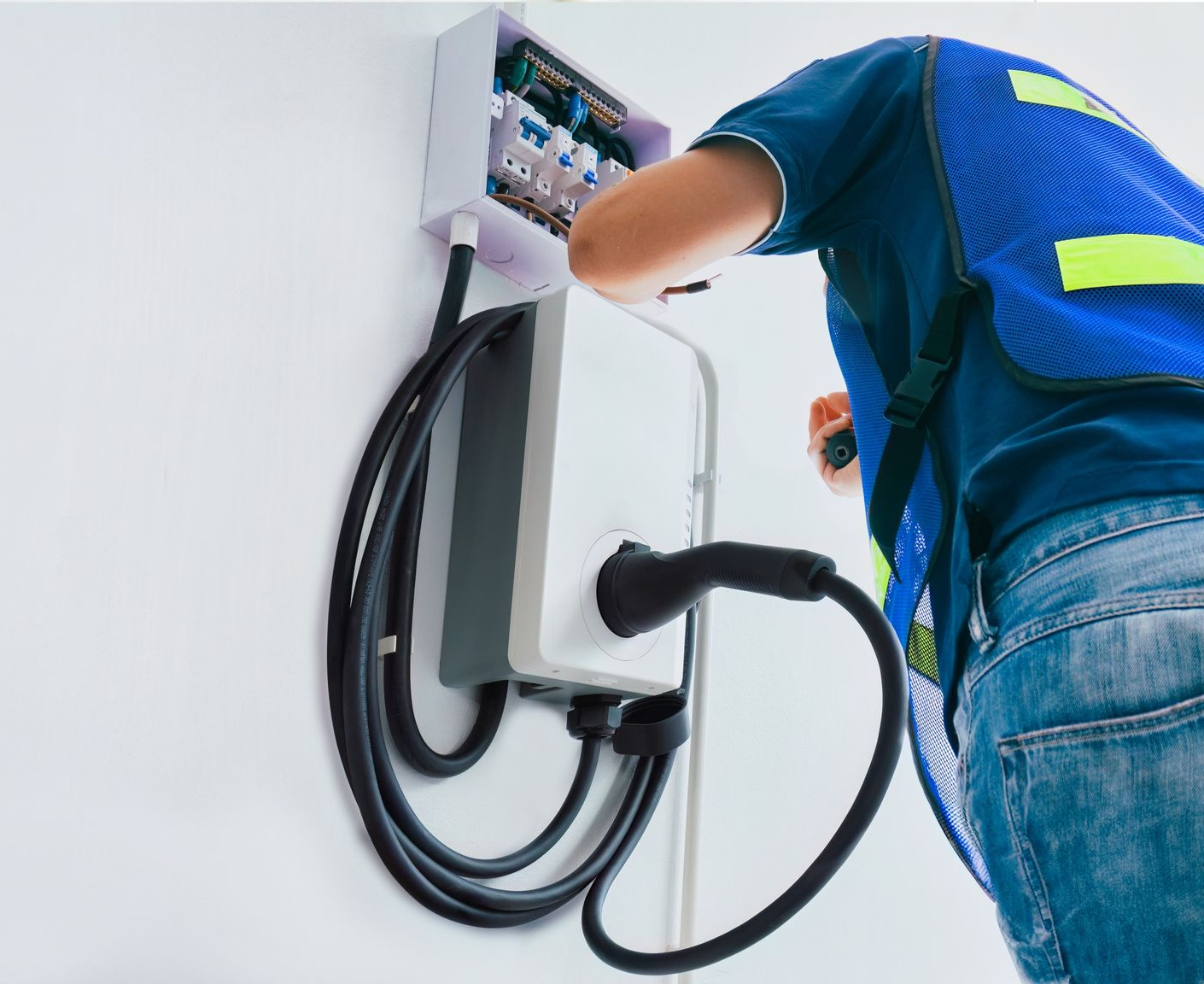
EV chargers draw continuous high amperage loads unlike other household appliances that cycle on and off, requiring dedicated circuits sized for sustained operation without overheating conductors or tripping breakers. The installation process includes verifying that existing panels have available breaker spaces and sufficient total amperage capacity, selecting appropriate wire gauges for circuit length, and installing conduit runs that protect wiring from physical damage in garage or outdoor environments. Mounting locations are chosen based on parking patterns, cord length limitations, and clearance requirements for safe vehicle maneuvering.
After installation, vehicle owners simply plug in when parking and wake to fully charged batteries each morning without monitoring charging progress or managing extension cords. Charging happens faster than Level 1 outlets, reducing the time vehicles are tethered to chargers and eliminating range anxiety from partial charges. Systems operate reliably in Gooding's temperature extremes, as properly installed Level 2 chargers include thermal management systems that prevent overheating during summer use and function normally during winter cold snaps.
Installation includes configuring charger settings for optimal charging speeds based on vehicle specifications and explaining how time-of-use electricity rates can reduce charging costs when utilities offer lower rates during off-peak hours.
Common Questions About This Service
EV charger installations raise specific questions about compatibility, costs, and electrical requirements that differ from standard appliance circuits.
What determines whether a panel upgrade is needed before installing a charger?
Total panel capacity is compared against existing household loads plus the charger's amperage requirement—if the combined load exceeds 80 percent of panel rating, an upgrade provides safer operation and room for future electrical additions.
How do hardwired chargers differ from plug-in models?
Hardwired units connect directly to dedicated circuits without outlets, reducing potential connection points that loosen over time, while plug-in models use NEMA 14-50 outlets similar to electric dryer receptacles and allow portability if you relocate.
When should conduit be installed underground versus surface-mounted?
Underground conduit protects wiring from damage and maintains clean appearances for chargers mounted on detached garages or carports, while surface conduit works for installations where walls provide direct paths from panels to mounting locations.
What charging speed should homeowners expect after installation?
Most Level 2 residential chargers deliver 7 to 11 kilowatts, translating to 25 to 35 miles of range per charging hour depending on vehicle efficiency, fully charging typical EV batteries in six to eight hours from empty.
How does cold weather in Magic Valley affect EV charging performance?
Batteries accept charge slower in freezing temperatures and some energy goes to battery heating rather than range, meaning winter charging takes slightly longer but properly sized Level 2 chargers still complete overnight charging for daily driving needs.
Charged Up Electric LLC handles EV charger installations with code-compliant workmanship and competitive pricing. Request an installation estimate to discuss charger options and electrical requirements for your property.