Capacity That Supports Modern Power Demands
Electrical Panel Upgrades in Gooding for homes and businesses outgrowing existing electrical capacity
Electrical panels distribute incoming utility power across individual circuits serving different areas and appliances throughout a building. Charged Up Electric LLC replaces outdated or undersized panels for homeowners and businesses in Gooding dealing with frequent breaker trips, insufficient capacity for new equipment, or panels that no longer meet current electrical codes. Panel upgrades improve system safety, increase available amperage, and provide breaker spaces for additional circuits required by kitchen remodels, EV chargers, generators, or facility expansions.
The upgrade process begins with evaluating total electrical load from all connected devices and planned additions, then recommending panel sizes that accommodate current usage plus future expansion. Work involves coordinating temporary utility disconnection, removing old panels, installing new panels with appropriate amperage ratings, reconnecting existing circuits, and adding new circuits as needed. All installations meet inspection requirements and include proper grounding, bonding, and surge protection.
Request a panel evaluation and estimate to determine appropriate panel capacity for your electrical needs.
When Panel Upgrades Become Necessary
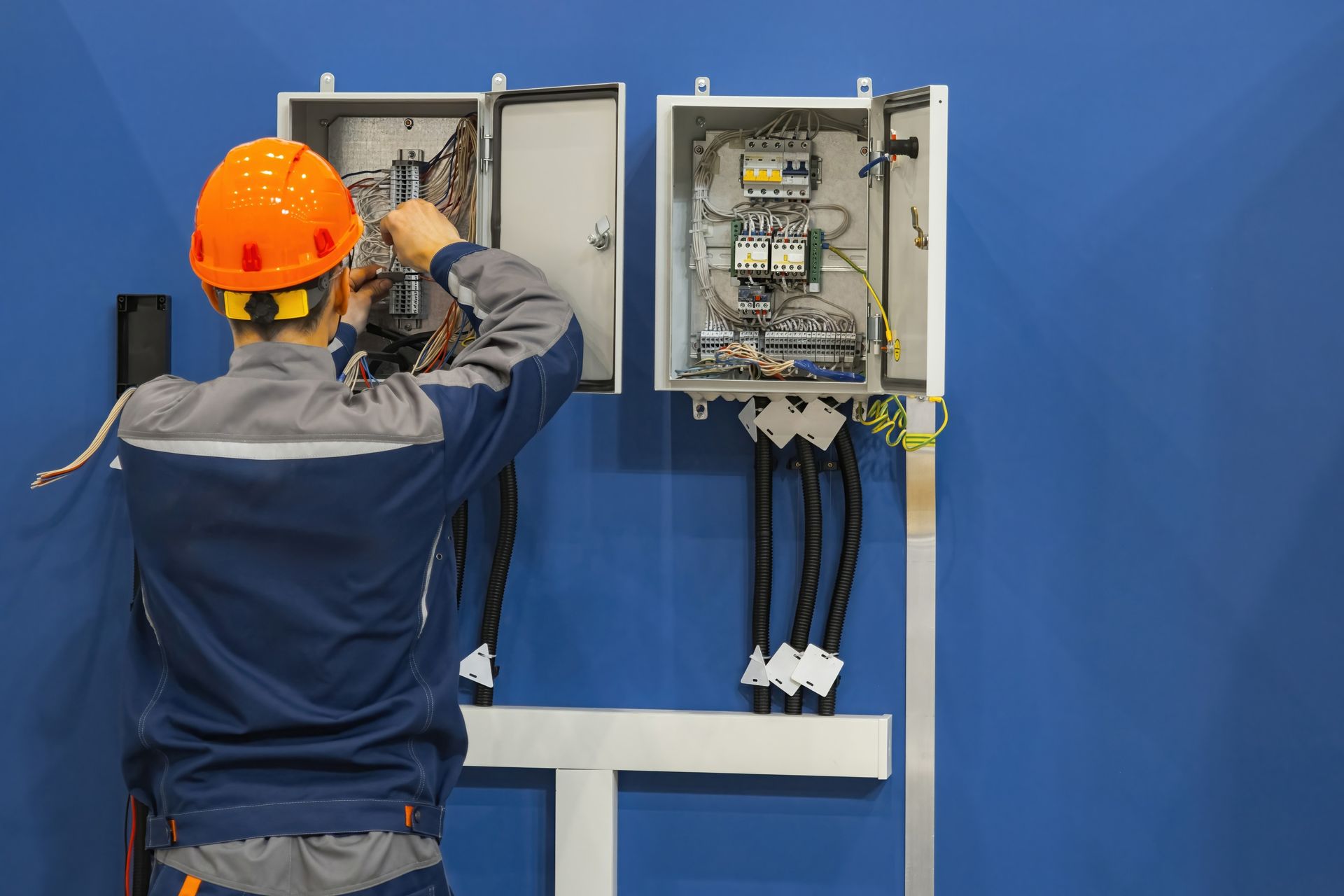
Panels require upgrades when total connected load approaches or exceeds rated capacity, when physical damage or corrosion compromises safety, when breaker spaces are exhausted and additional circuits are needed, or when renovations add appliances that existing panels cannot safely supply. The evaluation includes inspecting existing panels for signs of overheating, testing breakers for proper operation, calculating current electrical demand, and determining whether utility service capacity matches proposed panel upgrades. Some situations require utility company service upgrades before larger panels can be installed, particularly when increasing from 100-amp to 200-amp service.
After panel replacement, electrical systems handle simultaneous operation of multiple high-draw appliances without breakers tripping, new circuits support additional loads from remodels or equipment installations, and updated panels include modern safety features like arc-fault and ground-fault protection required by current codes. Buildings pass electrical inspections more easily, and homeowners avoid situations where insurance companies flag outdated panels as liabilities during policy renewals or home sales.
Upgrades include labeling all circuits clearly, providing documentation of panel specifications, and explaining which breaker controls which areas of the building for future reference during maintenance or emergency shutdowns. Charged Up Electric LLC coordinates utility disconnection scheduling to minimize time without power during panel replacement.
Questions Before Starting Your Project
Panel upgrades involve coordination, planning, and understanding how the work affects both short-term operations and long-term electrical capacity.
What preparation is required before panel replacement begins?
Clearing access to the existing panel, identifying essential circuits that need priority reconnection, and notifying utility companies for service disconnection appointments all help installations proceed without unnecessary delays or extended power outages.
How long does power remain disconnected during panel replacement?
Most residential panel swaps are completed within four to six hours, including utility disconnection and reconnection, though larger commercial panels or complicated circuit configurations may require full-day shutdowns with work scheduled during closed business hours.
What panel size is appropriate for typical residential needs?
A 200-amp panel handles most modern homes with central air conditioning, electric appliances, and room for future additions like EV chargers or generators, while smaller homes with gas heating and cooking may function adequately with 150-amp service.
When do utility company upgrades become necessary?
If existing utility service delivers only 100 amps at the meter and a 200-amp panel is needed, the utility must install larger service conductors and possibly upgrade transformers before the panel replacement can proceed legally.
How does panel location affect upgrade costs?
Panels mounted in basements with easy access and short distances to utility meters cost less to replace than panels located in awkward spaces requiring extensive conduit runs or structural modifications to accommodate larger enclosures.
Charged Up Electric LLC provides quality panel upgrades with code-compliant installations and competitive pricing that reflects the "Charged Up Electric, Not Overcharged" approach. Schedule an evaluation to discuss panel capacity and upgrade options for your property.